
In an era defined by rapid technological advancement and ever-shifting market dynamics, the imperative for businesses to embrace digital transformation is no longer a strategic option—it’s a foundational requirement for survival and growth. Yet, for many leaders, the journey into digital solutions can feel like navigating a complex maze, fraught with uncertainty and the promise of abstract returns. The digital landscape is rife with buzzwords and grand visions, but what truly matters are tangible outcomes: measurable impact, operational efficiencies, and sustained competitive advantage.
This is precisely where the power of digital solutions case studies becomes indispensable. They cut through the noise, offering clear, evidence-based narratives of how organizations have successfully leveraged technology to overcome significant challenges, seize new opportunities, and achieve remarkable results. These aren’t just stories; they are blueprints, demonstrating proven strategies and real-world applications that can inform, inspire, and de-risk your own digital initiatives.
This article will delve into the critical elements that define successful digital solutions, explore compelling real-world scenarios through illustrative case study archetypes, and distill the actionable insights necessary for any business professional, founder, marketer, or technical decision-maker to navigate their digital journey with confidence. By examining what works—and why—we aim to equip you with the strategic framework to transform your digital aspirations into demonstrable success.
The Imperative of Digital Transformation in Today’s Landscape
The global economy is undergoing a profound metamorphosis, driven by interconnected digital technologies. From artificial intelligence and machine learning to cloud computing, big data analytics, and the Internet of Things, the tools available to businesses are more powerful and pervasive than ever before. However, simply adopting technology for technology’s sake is a recipe for wasted resources and missed opportunities. True digital transformation is about reimagining business processes, refining customer experiences, and fostering a culture of innovation, all underpinned by strategic technological integration.
The pressure to innovate is relentless. Customers demand seamless, personalized experiences. Competitors are constantly seeking disruptive advantages. Regulatory environments are evolving. In this dynamic context, the ability to rapidly adapt, optimize, and leverage digital solutions isn’t merely a competitive edge; it’s a fundamental requirement for maintaining relevance and ensuring long-term viability. Case studies serve as invaluable compasses, guiding organizations through this complex terrain by showcasing practical applications and their quantifiable benefits.
Deconstructing Success: What Makes a Digital Solution Case Study Compelling?
A truly compelling digital solution case study goes far beyond a simple narrative of implementation. It meticulously unpacks the journey, providing insights into the strategic thinking, challenges overcome, and the measurable impact achieved. These studies typically share several key characteristics:
- Clear Objectives: What specific business problem or opportunity was being addressed?
- Strategic Approach: How was the solution conceived, designed, and planned? What methodologies were employed?
- Challenges Overcome: What obstacles (technical, cultural, financial) were encountered, and how were they mitigated?
- Implemented Technologies: Which specific digital tools, platforms, or systems were utilized, and why were they chosen?
- Quantifiable Results: The most crucial element—demonstrable ROI, improved KPIs, or other measurable benefits.
- Lessons Learned: Insights that can be applied by other organizations facing similar situations.
Understanding these components allows businesses to extract maximum value from existing successes, informing their own strategic decisions and helping to build a robust framework for future digital initiatives.
Strategy First: Aligning Digital Initiatives with Business Goals
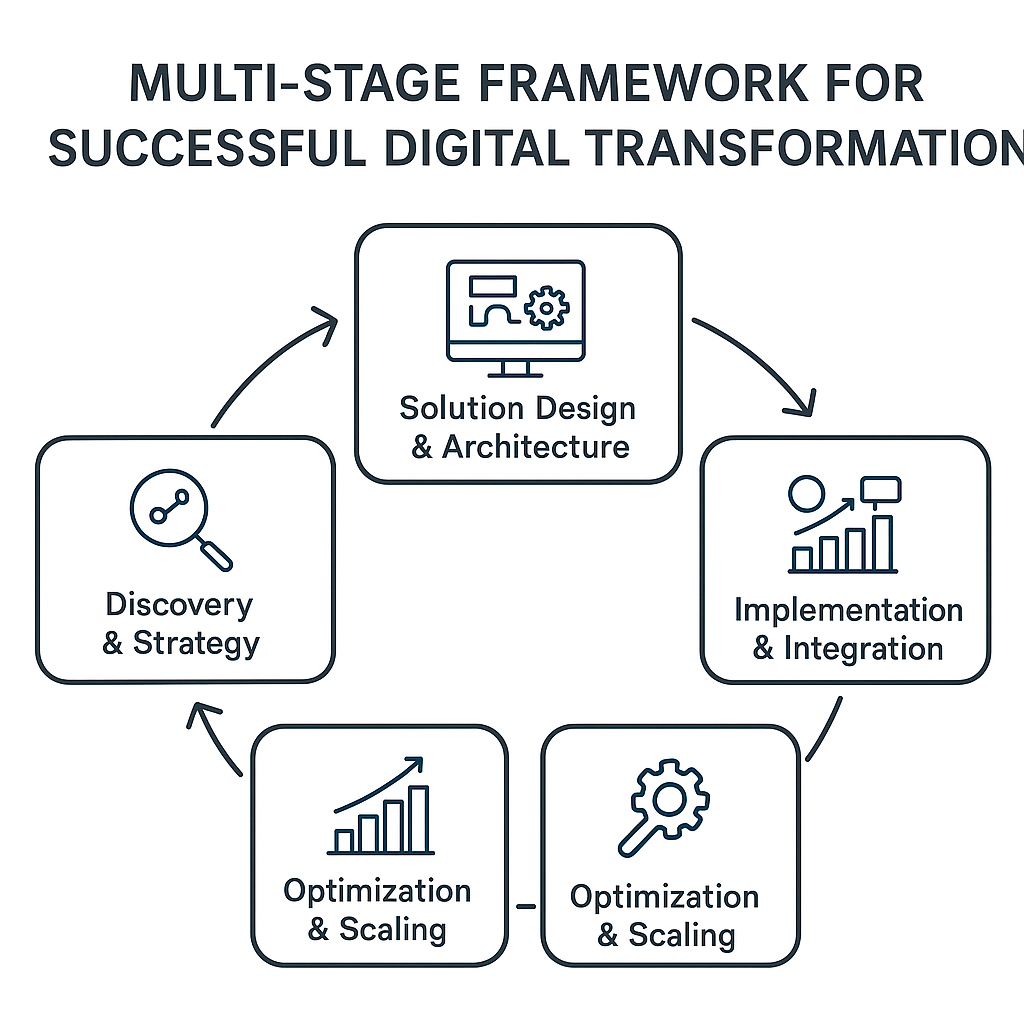
The foundation of any successful digital solution lies in a well-defined strategy that is inextricably linked to overarching business objectives. Digital tools are enablers, not ends in themselves. Without a clear understanding of what an organization aims to achieve—whether it’s increased market share, enhanced customer satisfaction, cost reduction, or accelerated innovation—digital projects risk becoming rudderless, failing to deliver meaningful impact. This necessitates a holistic approach, integrating technological capabilities with organizational culture, operational processes, and market demands.
Strategic alignment ensures that resources are allocated effectively, efforts are focused on high-impact areas, and the entire organization is united towards a common vision. It involves a meticulous planning phase, often encompassing comprehensive audits of existing systems, identification of pain points, stakeholder engagement, and the development of a detailed roadmap that outlines phased implementation and anticipated outcomes. This proactive, strategic groundwork is often the distinguishing factor between digital endeavors that merely consume resources and those that generate transformative value.
Leveraging Data for Insight and Impact
In the digital age, data is the new currency. Successful digital solutions are inherently data-driven, transforming raw information into actionable intelligence that fuels better decision-making and continuous improvement. Companies that excel in this area don’t just collect data; they implement sophisticated analytics platforms, build robust data governance frameworks, and cultivate a data-literate workforce capable of interpreting insights and translating them into strategic actions.
From predictive analytics that anticipate customer needs to real-time dashboards that monitor operational performance, data empowers organizations to understand market trends, optimize processes, personalize customer experiences, and identify new revenue streams. The ability to measure the impact of digital initiatives—and iteratively refine them based on data feedback—is critical for sustaining momentum and ensuring long-term success. It moves digital transformation from a one-off project to an ongoing, adaptive process of value creation.

Real-World Examples: Patterns of Success Across Industries
While specific company names may vary, the underlying patterns of successful digital solutions often cut across diverse industries. By examining these archetypes, we can extract universal lessons and apply them to various business contexts.
Case Study Archetype 1: Enhancing Customer Experience Through Personalization
Problem: A traditional retail business faced declining customer loyalty and sales due to generic interactions and a lack of understanding of individual customer preferences. Their existing e-commerce platform offered a one-size-fits-all experience, resulting in high bounce rates and abandoned carts.
Solution: The company implemented an integrated digital customer experience platform. This involved upgrading their CRM system, integrating an AI-driven personalization engine, and developing an omnichannel strategy that unified online, in-store, and mobile interactions. Data from past purchases, browsing behavior, and customer service interactions were consolidated to create rich customer profiles.
Impact: Within 18 months, the company saw a 25% increase in repeat customer purchases, a 15% improvement in conversion rates from personalized recommendations, and a significant rise in customer satisfaction scores. The seamless, tailored experience fostered deeper customer engagement and loyalty, transforming their digital presence from a mere sales channel into a powerful relationship-building platform.
Case Study Archetype 2: Streamlining Operations and Boosting Efficiency
Problem: A manufacturing firm struggled with outdated legacy systems, manual data entry across disparate departments, and a lack of real-time visibility into their supply chain. This led to production bottlenecks, costly errors, and extended lead times for product delivery.
Solution: The firm embarked on a comprehensive operational digitization project. This included implementing a new cloud-based Enterprise Resource Planning (ERP) system to centralize data and automate core business processes, deploying Robotic Process Automation (RPA) for repetitive administrative tasks, and integrating IoT sensors into their production line for real-time monitoring and predictive maintenance. A digital twin of their factory floor provided simulated testing and optimization capabilities.
Impact: The transformation resulted in a 30% reduction in operational costs, a 20% increase in production efficiency, and a 50% decrease in manual data entry errors. Lead times were cut by 25%, significantly improving customer satisfaction and allowing the company to respond more rapidly to market demands. The newfound data visibility empowered management with accurate, real-time insights for strategic decision-making.
Case Study Archetype 3: Driving Innovation with New Business Models
Problem: A traditional media company faced intense competition from digital-native content providers and declining revenue from conventional advertising models. They needed to innovate and diversify their offerings to remain relevant and capture new audiences.
Solution: The company pivoted towards a digital-first strategy, launching a premium subscription-based content platform. This involved investing in advanced content management systems, developing AI-powered content recommendation algorithms, and establishing a robust analytics infrastructure to understand subscriber behavior. They also explored strategic partnerships with tech innovators to co-create interactive digital experiences and explore new monetization channels like virtual events.
Impact: Over three years, the company successfully transitioned from a declining advertising model to a thriving subscription-based business, acquiring over a million new paying subscribers. This not only created stable, recurring revenue streams but also allowed them to invest further in high-quality, exclusive digital content. Their agility in embracing a new business model re-established them as an innovative leader in the evolving media landscape, demonstrating how digital solutions can unlock entirely new avenues for growth and market positioning.
Critical Success Factors for Digital Solution Implementation
Beyond the specific technologies or strategies, several overarching factors consistently emerge as critical for the successful implementation and sustained impact of digital solutions:
- Strong Leadership & Vision: Digital transformation requires unwavering commitment from top leadership, who must articulate a clear vision and champion change throughout the organization.
- Organizational Culture & Change Management: Resistance to change is natural. Successful initiatives involve proactive change management strategies, clear communication, and fostering a culture that embraces innovation, continuous learning, and adaptability.
- Agile Methodologies: Adopting agile and iterative development approaches allows organizations to respond quickly to feedback, pivot when necessary, and deliver value incrementally, reducing risk and accelerating time-to-market.
- Talent Development & Upskilling: Investing in training and development to equip employees with the necessary digital skills is paramount. A skilled workforce is essential for leveraging new technologies effectively and driving adoption.
- Data Governance & Security: Establishing robust data governance policies and stringent cybersecurity measures is non-negotiable. Protecting sensitive information and ensuring data integrity builds trust and maintains compliance.
- Strategic Partnerships: Collaborating with expert vendors, technology providers, and even complementary businesses can bring specialized knowledge and accelerate implementation, mitigating internal resource constraints.
These factors collectively create an environment conducive to successful digital transformation, moving beyond mere technological adoption to genuine organizational evolution.
Measuring ROI and Sustaining Momentum
The journey of digital transformation doesn’t end with implementation; it’s an ongoing process of optimization and adaptation. Crucially, businesses must establish clear metrics for measuring the return on investment (ROI) of their digital solutions. This goes beyond immediate cost savings to encompass improvements in customer satisfaction, market share, innovation capacity, and employee productivity.
Regular performance reviews, A/B testing, and continuous feedback loops are vital for identifying areas for refinement and ensuring that digital solutions remain aligned with evolving business needs and market realities. Scalability considerations must also be front and center, ensuring that initial successes can be expanded to meet future demands without encountering significant technical or operational hurdles. Sustaining momentum requires a culture of continuous learning, agile iteration, and a commitment to leveraging digital tools as strategic assets for long-term growth.
Conclusion
The digital solutions landscape, while complex, offers unprecedented opportunities for businesses ready to embrace change and strategically leverage technology. Through the lens of real-world case studies, we gain invaluable insights into the proven strategies that drive success—from meticulously aligning digital initiatives with business goals to harnessing the power of data for transformative impact. These examples demonstrate that true digital success is not accidental; it is the deliberate outcome of strategic planning, robust execution, and an unwavering commitment to continuous improvement.
For business leaders, founders, and decision-makers, the message is clear: understanding and applying the lessons from these successful transformations is paramount. By focusing on measurable outcomes, fostering an adaptive culture, and prioritizing strategic alignment, any organization can forge its own path to digital excellence. The proven strategies are there; the real-world success stories abound. It is now up to forward-thinking enterprises to translate these insights into their next chapter of growth and innovation.
Leave a Reply